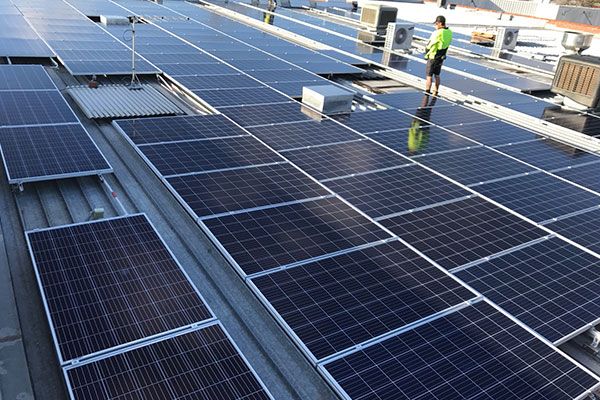
The world is swiftly shifting towards renewable energy, and solar panels are the most prevalent choice for many homeowners and businesses. But what about structures with flat roofs? Is it feasible to install solar panels on them? Definitely, yes! This article will explore the benefits, challenges, and considerations of installing solar panels on flat roofs.
Table of Contents
- Introduction
- Can You Install Solar Panels on a Flat Roof?
- Advantages of Flat Roofs for Solar Panel Installation
- Challenges of Installing Solar Panels on a Flat Roof
- Factors to Consider When Installing Solar Panels on Flat Roofs
- Does Installation Cost More for Flat Roofs?
- Efficiency of Solar Panels on Flat Roofs
- Safety Concerns with Flat Roof Installations
- Frequently Asked Questions
- Conclusion
Introduction
The transition to solar energy is a smart, eco-friendly decision that works remarkably well for a variety of roof types, including flat roofs. However, installing solar panels on flat roofs comes with certain unique considerations. This thorough guide will take you through these aspects, helping you make an informed decision.
Can You Install Solar Panels on a Flat Roof?
Yes, it is entirely plausible to install solar panels on a flat roof. However, the process might need some extra planning and specific equipment to ensure optimal installation. The key is to take into account the flatness of the roof and adjust the solar panel system accordingly. This way, you can position the panels to face south and at an angle that yields maximum energy production.
Advantages of Flat Roofs for Solar Panel Installation
Flat roofs offer several benefits when it comes to solar panel installation. Here are some of them:
1. Optimized Solar Output
On flat roofs, you have the flexibility to adjust the direction and angle of your solar panel system for optimal sunlight exposure. This capacity to orient the panels precisely can result in better output than from a sloping roof that doesn’t face the right direction.
2. Lower Installation Costs
The process of installing solar panels is less risky on flat roofs as there are significantly fewer chances of accidents during the installation process. This safety can reduce the overall installation cost.
3. Less Risk of Damage
Flat roofs can withstand the wear and tear of the installation process better than sloping roofs. There is less risk of damaging the roof during the installation.
4. Aesthetic Considerations
Solar panels on flat roofs are not easily visible from the street level. This can help maintain the overall aesthetic value of your property.
Challenges of Installing Solar Panels on a Flat Roof
Despite the benefits, installing solar panels on a flat roof comes with certain challenges:
1. Finding the Right Installer
Locating a company that has the expertise and equipment to install solar panels on a flat roof can be challenging. Not all companies are equipped to handle angled installations on flat roofs.
2. Possible Warranty Issues
Some manufacturers might void their warranty if solar panels are installed on flat roofs due to the increased risk of water damage.
3. Reduced Energy Production Over Time
Dirt and debris accumulation on flat solar panels can reduce their efficiency over time. Therefore, they require more frequent cleaning.
Factors to Consider When Installing Solar Panels on Flat Roofs
Before proceeding with the installation, consider these factors:
- Conduct a thorough examination of your roof’s condition and potential risks.
- Evaluate your geographical location and the amount of sunlight your roof receives.
- Consider the weather conditions in your region as harsh weather can damage solar panels.
- Choose a company that offers horizontal flat roof installation.
Does Installation Cost More for Flat Roofs?
Generally, installation costs for solar panels on flat roofs are competitive with standard sloped rooftops. However, the need for specialized equipment to angle the panels for optimal sunlight exposure might slightly increase the overall cost.
Efficiency of Solar Panels on Flat Roofs
Solar panels on flat roofs can achieve a high level of efficiency. They can be oriented to face south and mounted at the optimal angle to maximize solar energy generation. Thus, under ideal conditions, solar panel systems on flat roofs can often result in better performance compared to those on sloped roofs.
Safety Concerns with Flat Roof Installations
Installing solar on a flat roof is generally safer for the installers. However, it’s crucial to mount the panels at an angle to avoid issues like dirt accumulation and water pooling, which can cause damage over time.
Frequently Asked Questions
Here are some common questions about installing solar panels on flat roofs:
- Can I still avail of the solar tax credit for a flat roof installation? Yes, solar incentives and rebates apply to all roof types.
- Do I need specific solar racking for a flat roof? Yes, additional racking might be necessary to ensure optimal energy production.
- Can I combine battery storage with my flat roof solar system? Yes, you can install a solar-plus-storage system on a flat roof.
- Will my flat roof solar system produce less energy? No, under optimal conditions, a flat roof solar system can be just as or more efficient than a regular system.
Conclusion
A flat roof doesn’t have to deter you from installing a solar panel system. With the right planning and considerations, you can harness the power of the sun efficiently and effectively.